Insider's secret on how to make it work
Social Exchange Theory
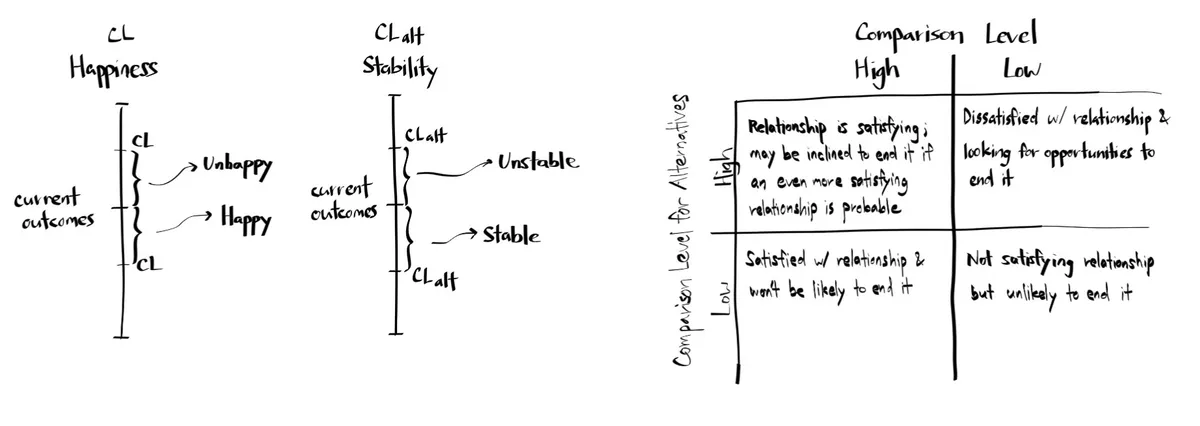
This is a theory based on the idea that how people feel about a relationship depends on their assessments of its costs and rewards. It has two components:
- Comparison level — expectations about what people think they deserve or expect to get out of a relationship, formed from parents' relationship, friends' relationships, and the media
- Comparison level for alternatives — expectations about what people think they can get out of alternative relationships In short, if current outcomes are lower than comparison level and higher than comparison level for alternatives, people will feel satisfied and secure in their relationship. Knowledge of this concept explains our unconscious drive to strive for "fairness" in a relationship and evaluate reciprocity—are both partners putting in the same amount? It may be good to ask yourself: Is this relationship adding value to my life, and am I providing my partner with the same amount value as they are me?
Please enjoy these graphs and tables I illustrated for your better understanding:
Investment Model of Commitment
This is a model of interpersonal relationships that maintains there are 3 determinants that make partners more committed to each other. They include:
- Satisfaction = Outcomes - Expectations
- Stability = Outcomes - Alternate Partners
- Investments (life built together, children) Do you know what this tells us? This tells us if you want to stay with your partner long-term, get a cat together. If your mutual love won't keep the two of you together, at least love and responsibility for the cat will (this is a joke). This tells us that we should strive to increase satisfaction, either by increasing outcomes or lowering expectations. If satisfaction is high, people will naturally want to remain in relationships. Social media often gives us the illusion that we have many options and so our standards are high. Even fiction can cause the same effect—the amount of people who say only fictional men do it for them is concerning. It is important to recognize that and manage expectations. Even though you shouldn't depend on investments to hold the relationship together, it is worthwhile to create shared experiences and integrate into each others' lives. This creates commitment, which drives actions that maintain the relationship.
Tips & Tricks on Creating Strong Romantic Bonds
- Capitalizing on the good by sharing what's good in your life (yes, this can mean sharing funny memes with each other)
- Being playful to keep relationship from becoming boring (dancing in the street in the middle of the night like in The Notebook)
- Finding the good in your partner (put on those rose-colored glasses!)
Blogger's Friends Have Things to Say
Survey Question: How would you go out of your way to create a stronger bond with your partner?
Summary of Main Themes in Responses:
- Honest communication about thoughts & feelings
- Doing activities together (playing games, trying new food, playing Stardew Valley, watching shows & movies then debriefing, playing NYT games, playing card games, cooking together, going on a hike/walk,
- Being thankful & intentional with time together
- Making self made gifts
- Taking time to understand each other
- Small acts of kindness It appears as if my friends are very good at loving their partners!
Chapters covered:
- Chapter 9 (investment model of commitment, social exchange theory, creating stronger romantic bonds)